Yes! We are over 6,300 strong. Thank you for your follows and support. We know how keen you are to show your Nerds solidarity. So to celebrate our followers, we’re offering all kinds of Nerds merchandise right here. Enjoy & post photos with your purchases!
The UK steel industry is at a crossroads — and the decisions made now will determine whether Britain rebuilds a competitive, green steel sector or cedes it entirely.
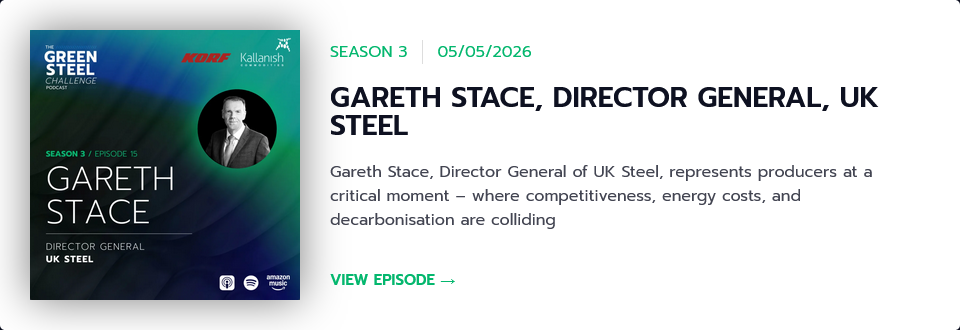
In the latest episode of The Green Steel Challenge, Gareth Stace, Director General of UK Steel, lays out exactly where the industry stands and what it will take to turn things around. From chronic underinvestment and sky-high energy costs to foreign ownership and a flood of imports from heavily subsidized producers abroad, Stace doesn’t sugarcoat the scale of the challenge.
But there’s also a real opportunity here. Stace explains how UK Steel is navigating this moment with its members and potential investors, buoyed by a government he considers the industry’s most supportive yet — working together to reimagine Britain’s steel supply chain, built around domestic demand and lower-carbon production. It’s a candid, detailed conversation you won’t want to miss.
About The Green Steel Challenge: Produced by the Korf Foundation and Kallanish Commodities, The Green Steel Challenge delivers practical, on-the-ground insights on steelmaking decarbonization — straight from the industry leaders making it happen. Coming up next: Marcel Genet, founder of steel consultancy Laplace Conseil, shares his perspective on the road ahead.
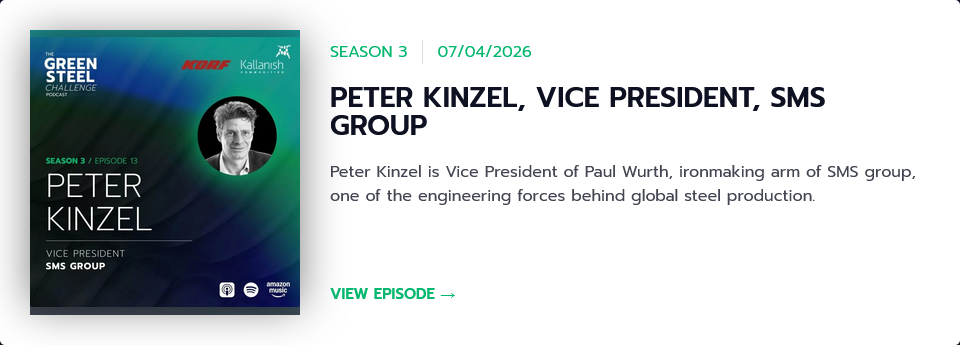
As Vice President of SMS Group — one of the world’s foremost steel plant manufacturers — Peter Kinzel works with steelmakers across continents, giving him rare insight into how different regions are tackling the same urgent challenge: cleaning up one of the world’s most carbon-intensive industries.
In his appearance on The Green Steel Challenge, Kinzel describes a “step-wise” approach to decarbonizing the blast furnace route. Rather than tearing down existing plant to build anew — a costly undertaking that also depends on access to the right raw materials and renewable energy — steelmakers in India and China are already pursuing continuous, incremental improvements that compound over time. He also challenges the hydrogen consensus, arguing that green ammonia deserves serious attention given the yield losses inherent in green hydrogen production.
Perhaps most striking is his assessment of China: backed by strong government support, Chinese steelmakers are making meaningful progress at pace — and the rest of the world needs to keep up.
About The Green Steel Challenge: Produced by the Korf Foundation and Kallanish Commodities, the podcast delivers practical insights on steelmaking decarbonization from industry leaders making it happen. The next episode features Dave Burritt, CEO of US Steel.
🚀 First River’s new website is live — and it comes with something they’re especially excited about.
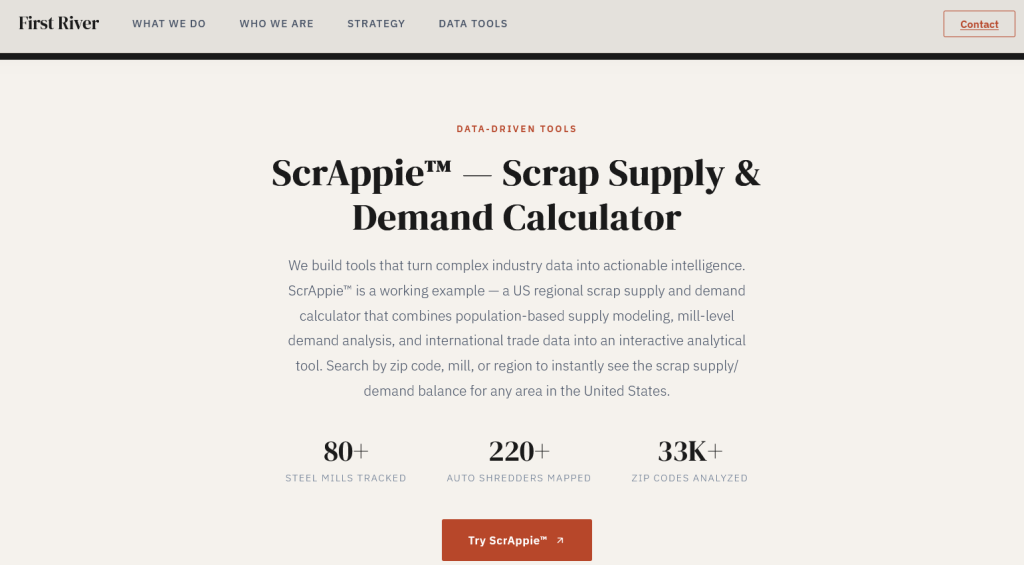
Introducing ScrAppie™, an interactive scrap supply/demand prototype app, built to help steel industry professionals make faster, smarter decisions on scrap availability and sourcing.
Beyond ScrAppie, you’ll find a fully refreshed site with cleaner navigation, sharper content, and a ‘What’s my strategic challenge?’ matrix — a practical tool designed to help you find answers.
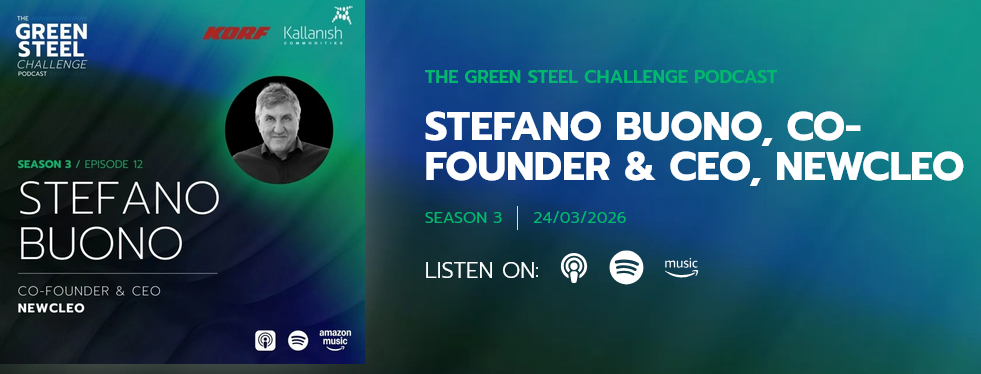
While energy costs are a critical hurdle for decarbonizing steel production, a breakthrough solution may lie in advanced modular liquid lead reactors. On The Green Steel Challenge, Newcleo’s co-founder and CEO Stefano Buono explains how this technology could provide the lower-cost energy the industry needs.
Buono describes a process that consumes spent fuel rods, the waste of traditional nuclear energy production that is stored at great expense wherever nuclear power plants have operated. Beyond recycling this waste, the modular design allows for a significantly lower construction cost per MW and a rapid three-year project timeline.
Investors have already taken notice of this efficient approach, and Buono believes the first plant is will be operational by 2035.
About The Green Steel Challenge: Produced by the Korf Foundation and Kallanish Commodities, the podcast delivers practical insights on steelmaking decarbonization from industry leaders making it happen. Peter Kinzel, Vice President SMS Group joins the next episode on April 7th.
Worldsteel reported crude steel production in China at 76.1 million metric tonnes in February, 3.6% lower than in February, 2025. Chinese production in the first two months of 2026 was 5.8% lower than in the same period last year.
China’s net finished steel exports (exports minus imports) for January and February, 2026 were 14.8 million tonnes, 7.3% lower than in the same two months of 2025.
Worldsteel published February, 2026 world crude steel production today. World crude steel output was 141.8 million metric tonnes, 2.2% lower than in February, 2025. China produced 76.1 million tonnes of crude steel in February, accounting for 54% of world output and declining 3.6% compared to February, 2025. Asian output outside of China rose 2.8% over […]